
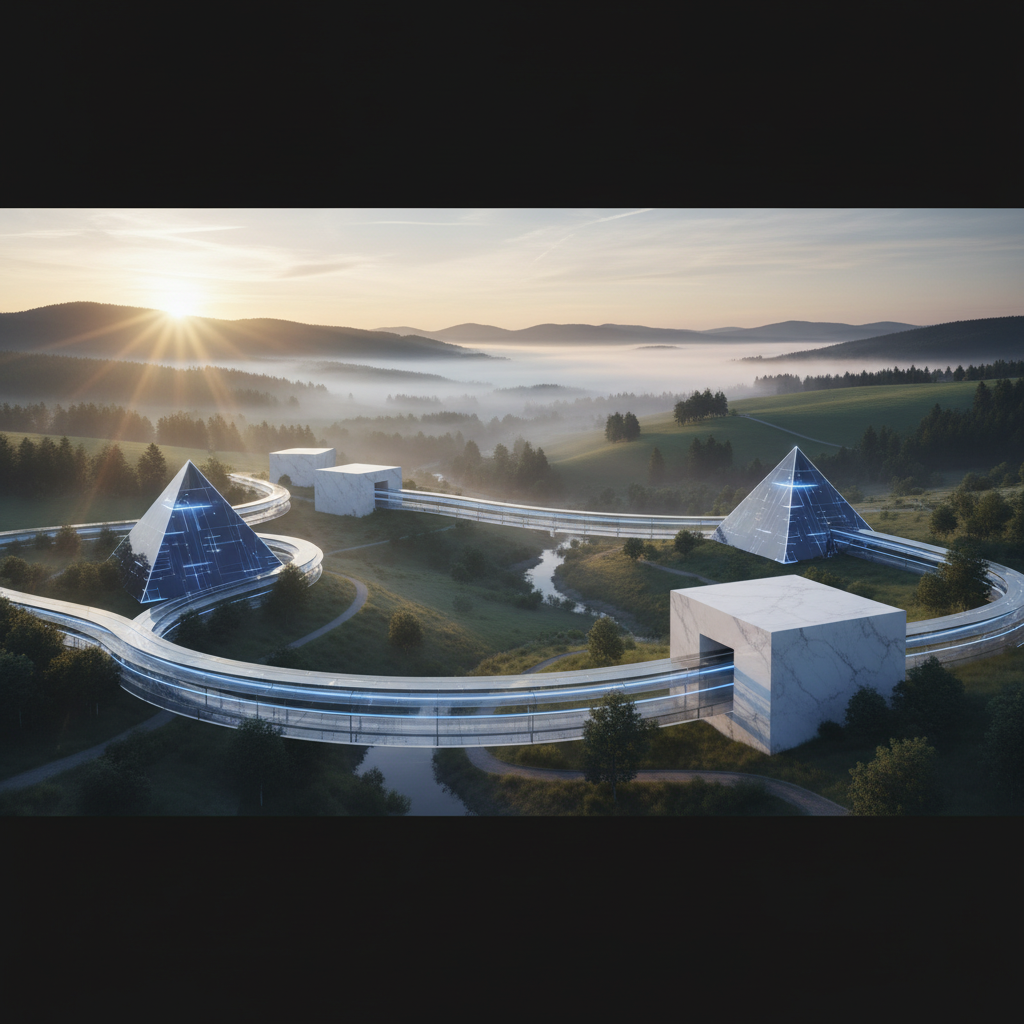
Hardware for the Rural Mind
Summary
Physical distance no longer limits the ability of a community to participate in high-value global work.
Investing in specialized local hardware hubs prevents the brain drain that currently weakens rural economies.
Reliable connectivity acts as a fundamental utility that supports education and professional growth simultaneously.
The Big Picture
For most of the last century, the story of economic progress has been a story of urbanization. If you wanted a high-paying job, a specialized education, or access to the latest tools, you had to move to a city. This created a massive imbalance. Talent flowed out of small towns and into a few dozen global hubs. This trend left rural areas struggling to maintain their schools, their hospitals, and their local businesses. The result was a divided economy where your zip code often determined your future potential.
However, we are entering a new era where the physical location of a worker matters less than the quality of their connection and the tools at their fingertips. The global economy is no longer a collection of physical office buildings. It is a vast, invisible network of data and creativity. When we build the right infrastructure in remote areas, we stop asking people to leave their homes to find success. Instead, we bring the success to them. This shift is not just about fairness. It is about national resilience. A country that relies on three or four massive cities is vulnerable. A country that has a thousand thriving, high-tech towns is stable and strong.
When we talk about this shift, we are talking about the foundation of human capital. Every person who stays in their hometown to work for a global firm is a person who spends their salary at the local grocery store. They pay local taxes. They volunteer for the local fire department. They keep the social fabric of the countryside from unraveling. This is the true power of bringing technology to the rural mind. It creates a self-sustaining loop of growth that does not require anyone to pack a suitcase.
Why Current Approaches Fail
Most current attempts to fix the rural-urban divide fail because they are too shallow. Many governments believe that if they simply run a fiber-optic cable to a small village, the problem is solved. This is a mistake. Connectivity is only the first step. Providing high-speed internet to a community without giving them the hardware or the training to use it is like building a highway through a town but not providing any cars. The internet becomes a tool for consumption - watching videos or scrolling social media - rather than a tool for production.
Another failure point is our current model of education. We often treat rural schools as preparation centers for city life. We teach students the skills they need to pass a test, but those skills are rarely tied to the actual tools used in modern industry. This creates a digital version of the old brain drain. A student learns to code or design, realizes there are no high-tech workshops in their town, and leaves for the city at the first opportunity. The rural community pays for the education, but the city gets all the economic rewards.
Finally, we see a lack of physical investment in rural spaces. We have moved toward a world where everything is supposed to happen in the cloud. But the cloud requires physical gates. To do high-level engineering, advanced visual effects, or complex data analysis, you need more than a cheap laptop. You need specialized hardware that is often too expensive for a single family to buy. Without local hubs that provide access to this high-end equipment, rural workers remain stuck in low-wage service jobs, even if they have a fast internet connection. The gap remains because the tools remain out of reach.
What Needs to Change
To bridge this gap, we must move from a model of access to a model of participation. This starts with building what we call Digital Anchor Institutions. These are physical spaces - perhaps located in libraries, community centers, or schools - that are stocked with the hardware required for modern work. These hubs should have high-performance workstations, advanced manufacturing tools like 3-D printers, and reliable satellite links that ensure they never go offline. These should not just be computer labs. They should be professional-grade workshops.
Next, we must change how we train the workforce. Training should be tied directly to the hardware available in these hubs. Instead of a general degree, we should focus on specific certifications that allow a person to start earning immediately. If a local hub has the tools for high-end graphic design, the local training should focus on that specific craft. This turns the rural town into a center of excellence for a particular niche. One town might become a hub for remote architectural drafting, while another becomes a center for medical data processing. This specialization gives the town a unique identity in the global market.
Policy makers must also think about the cost of living. One of the greatest advantages of rural areas is that they are affordable. If we can provide the same tools and connectivity found in a city, the lower cost of living becomes a massive competitive advantage. Governments should offer incentives for companies to hire from these rural hubs. This is not about charity. It is about tapping into a massive pool of talent that is currently underused. When a company hires a worker in a rural hub, they get a loyal, focused employee who is not dealing with the stress and high costs of city life. It is a win for everyone involved.
We also need to rethink the role of the local school. The school should be the heart of the digital workshop. Students should spend half their time on traditional subjects and the other half working on real projects for real clients using the hub's hardware. This gives them a portfolio of work and a clear path to a career without ever having to leave their community. It changes the message from - get an education so you can get out - to - get an education so you can build your town.
Looking Ahead
If we commit to this path, the next decade will see a Rural Renaissance. We will see the end of the empty main street. Small towns will be populated by a new class of digital artisans who are as connected to the global economy as any worker in London or New York. These workers will have the stability of a rural lifestyle and the income of a city professional. This will lead to a massive reinvestment in rural infrastructure, from better roads to improved healthcare, funded by the new tax base.
However, if we do not act, the divide will only grow deeper. The cities will become even more crowded and expensive, while the countryside will continue to hollow out. This creates social tension and economic fragility. We cannot afford to have half of our population disconnected from the primary drivers of modern wealth. The tools are ready. The connectivity is possible. The only thing missing is the will to build the physical spaces where the rural mind can meet the global market. The future of the economy is not just in the cloud. It is in the hardware we place in the hands of every citizen, no matter where they choose to live.